Review: Three UK Ambient Albums for Cosy Evenings

Some ambient records ask for your full attention. Others quietly change the temperature of a room. The three albums gathered here belong to the second group: made by artists working in the UK, built for lamplight rather than spotlights, and best heard in one sitting rather than dipped into between other things.
They are not the newest records on the shelf, but all three have earned a permanent place in the rotation — the sort you reach for on a wet Tuesday when the day has already been loud enough. Between them they cover a decent range: modular drone from Yorkshire, coastal field recordings from Orkney, and voice-and-synth pieces assembled in London.
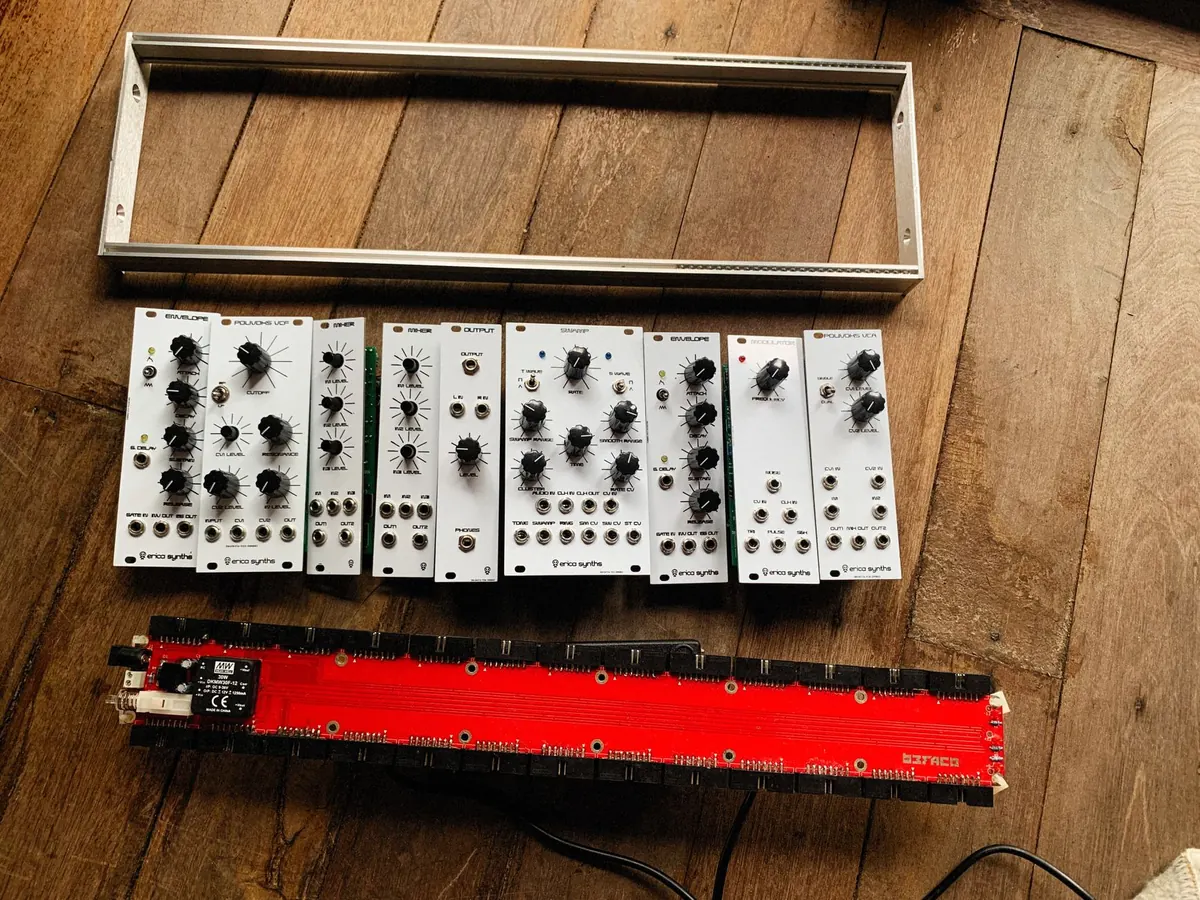
Craven Faults makes long-form electronic music on modular synths, and takes his time about it. Pieces run to ten minutes and beyond. A pulse appears, holds, then shifts by a single note; a bass line arrives so gradually that you only notice it once it has been there for a while. There are no drops, no vocals, and very little percussion. What holds the ear is detail — tape hiss, the small mechanical clicks of a sequencer, the way a simple arpeggio changes colour when a filter opens by a hair.
Erratics & Unconformities is the best place to start. The project takes its name from a geological fault system in the Yorkshire Dales, and the music carries the same sense of something shaped over an extremely long period. There are no sharp edges. Even the moments where the rhythm finally locks in feel less like an arrival than a tide turning. Put it on at nine o'clock with a book and you may find you have read the same page three times, which is not necessarily a bad outcome.
Played quietly, it becomes furniture in the best sense. Played at a decent volume on decent speakers, you hear how carefully the low end has been shaped. Either way, this is an album for the last hour of the day, not the first.
Erland Cooper grew up in Orkney and now works from London, and his records carry the weather of both places. Solan Goose is the clearest introduction: piano, strings, tape loops and field recordings of seabirds, all captured with an analogue warmth that keeps the edges soft. Nothing here is trying to be difficult. The melodies are simple and often repeated, and the interest lies in what accumulates around them — a low string swell, a gull call, wind brushing a microphone.
Two things make it particularly good for a cosy evening. First, it has movement. Where a lot of ambient music sits perfectly still, Cooper's arrangements rise and fall like a conversation in the next room. Second, it holds its shape from beginning to end, so it works as a complete listen rather than as background noise. Hether Blether, which followed, is gentler and more diffuse, and suits a later, quieter hour.
A small tip: if it is raining, open a window a crack. The record mixes unusually well with real weather.
Hinako Omori is Japanese-born and London-based, and her album a journey with invisible mending is built from synths, piano and her own voice. The voice is the interesting part. Rather than sitting on top of the music, it is processed and layered until it behaves like another instrument — a hum here, a wordless harmony there, phrases that surface and dissolve before you can hold on to them.
It is warmer and busier than the other two records, and it rewards headphones in a way they do not. Some pieces almost become songs; others drift. Played at a sensible volume on a decent pair of headphones, it does something useful at the end of a long week: it gives your attention one small, contained thing to hold while the rest of the day drains away.
All three work at low volume, but they do different jobs. A rough guide:
None of them wants to be shuffled into a bigger playlist. Their pacing only makes sense across a full run, and dropping a ten-minute drone between two pop songs tends to flatten both. Pick one, and give it the room.
Ambient music lives or dies on the space it is played in, and none of these records needs expensive equipment. A few small adjustments do most of the work.
Keep levels moderate, particularly on headphones, and look after your ears generally; if you want this music to last for years, protect the thing you are listening with. Beyond that, the only real rule is the obvious one: make the hour before bed slower than the rest of the day. Any of these three will do that for you.
Photo: StockSnap / Pixabay
Previous Post
Seasonal Ambient: 12 Tracks for a British Autumn Evening
Next Post
Electronic Ambient Subgenres Explained: Drone, Dark, Space, and More