Electronic Ambient Subgenres Explained: Drone, Dark, Space, and More

Ask five people to recommend an ambient album and you might get a wind-tunnel recording, a synth pad that drifts for eleven minutes, and something that sounds like a flooded basement. All of them qualify. That's why the word "ambient" can feel useless, and why the subgenre labels are worth knowing. Each one is shorthand for a set of textures, tempos and moods, so you can use them to find more of what you already like.
Before splitting hairs, the shared ground. Ambient usually favours timbre over melody, length over hooks, and a narrow dynamic range that rewards a room rather than a pair of headphones on a busy train. Rhythm is either absent or so regular it stops registering. Brian Eno, who named the form with Music for Airports in 1978, described it as music that should be as ignorable as it was interesting. Everything below is a variation on that idea, pushed in a particular direction.
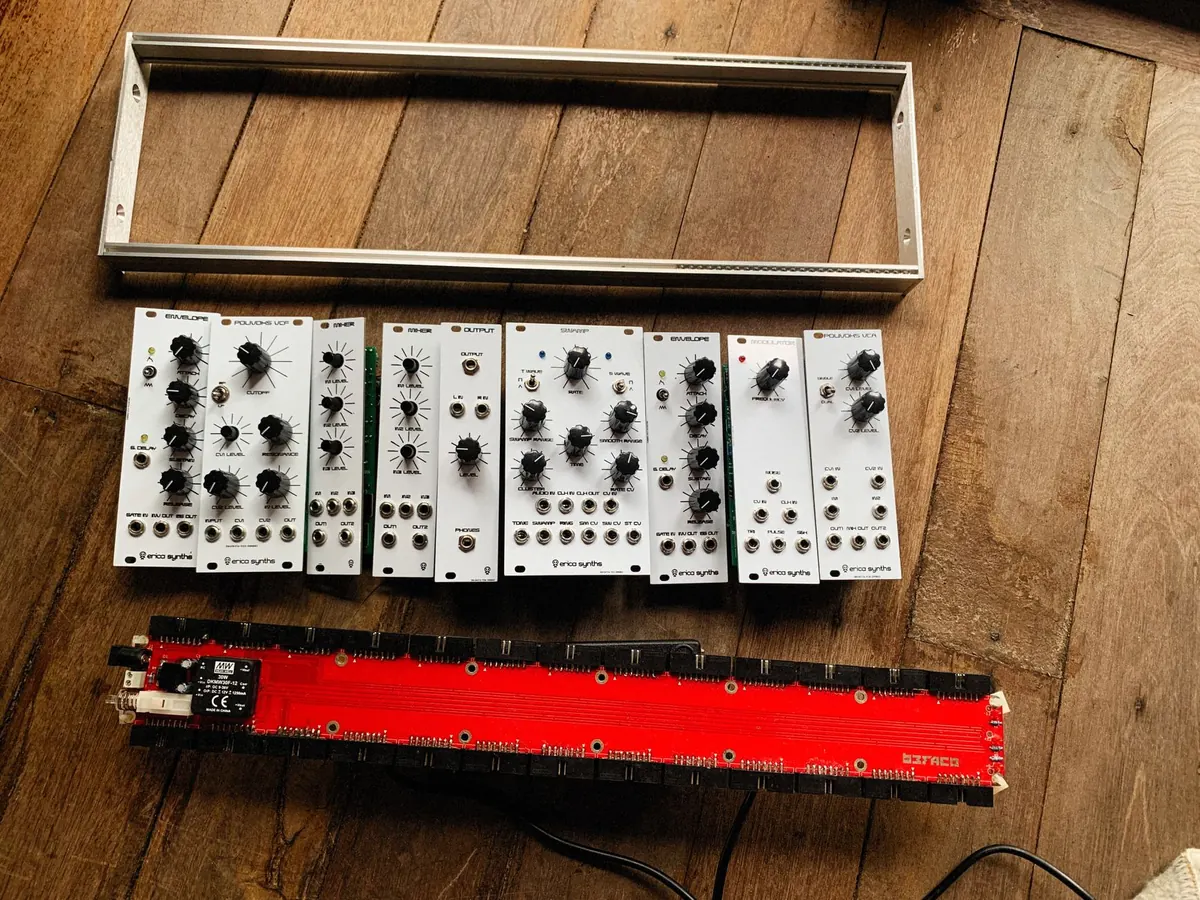
Drone is the purest branch: a single sustained tone or chord, held for minutes or for an entire record. Harmony barely moves. What changes is internal detail — beating between slightly detuned tones, overtones that seem to appear as you shift in your seat, tape hiss, bow noise, amplifier hum.
Tempo is effectively zero. Moods run contemplative, monumental, occasionally oppressive. The lineage stretches from La Monte Young's long tones and Éliane Radigue's slow synth cycles through Stars of the Lid's orchestral haze to Kali Malone's organ works and the amplifier-worship end of doom metal. No rhythm, no chord changes, no tune, and yet it holds you: that's drone.
Tip: play it on speakers where you can. Drone lives in the interaction between a room and a sustained sound, and headphones flatten that.
Dark ambient grew up in the late 1980s and 1990s alongside industrial music, keeping the dread and dropping the rhythms. The palette is subterranean rumble, treated field recordings, bowed metal, pitched-down choirs and reverb with a very long tail. Sub-bass pulses sometimes stand in for a beat.
Tempo is none to very slow, with a pulse you feel rather than count. The mood is unease, awe, solitude — a corridor rather than a club. Lustmord and Robert Rich are the names most often cited, and the sound has long since migrated into horror games and film scores. It isn't the same as horror synth, which tends to be rhythmic, melodic and knowingly retro.
Isolationism was a 1990s tag for the coldest end of this music: sparse, desolate, often recorded in empty rooms. Think Thomas Köner's Arctic-minded work, or the starker corners of the Touch catalogue. If dark ambient is a corridor, isolationism is the walk back through the snow.
Space ambient sounds like distance. It moves harmonically where drone doesn't: slow chord progressions, arpeggios fading in and out, melodic fragments half-buried in reverb. The synths are analogue or analogue-flavoured, with glassy upper frequencies and a low end that implies scale.
There are usually no drums, but often a steady sequencer pulse. The Berlin School of the 1970s — Tangerine Dream, Klaus Schulze — is the ancestor; Steve Roach's long-form releases are the reference point for most listeners. Moods: awe, loneliness, wonder, sometimes claustrophobia, because a vacuum is not a friendly place.
Listen for movement. Drone holds a chord; space ambient changes chords, even if it takes four minutes to do so. If there's an arpeggio, you're almost certainly in space territory.
The moment a kick drum appears, the argument starts. Ambient house, the late-1980s chillout sound, sits around 90–110 BPM with soft percussion, sampled voices and heavy reverb. Ambient techno runs faster and cleaner, often 110–130 BPM, laying ambient's pads over techno's structure. Dub ambient and dub techno slow everything down, push the bass forward and drown the drums in delay — Basic Channel, Rhythm & Sound and the Chain Reaction lineage.
Two things confuse newcomers. Plenty of ambient techno is beatless: Aphex Twin's Selected Ambient Works Volume II is filed there constantly and contains no drums at all. And "ambient" in a techno context can simply mean the intro is long. Check whether the beat arrives, and whether it stays.
Illbient came out of 1990s New York: hip-hop tempos, murky samples, dub weight and no interest in resolving into a groove. If you like the idea of ambient with a limp, start there.
Not all ambient is electronic in origin, even when it's electronic in production. This wing treats recorded sound as raw material: rain on a tent, ice cracking, a fridge hum, the tone of an empty building. Chris Watson and Jana Winderen work here, as does Biosphere; Eno's On Land is a famous early example of treating environmental sound as composition.
Lowercase is the quiet extreme — tiny sounds, long gaps, near-silence as a deliberate choice. Steve Roden's Forms of Paper is the album people cite. It is genuinely difficult to listen to on a train.
Tip: this is the one branch where headphones and a quiet room are essential, and where your chosen volume changes the music more than the label does.
The warmest, most accessible branch: piano, strings, soft synths, major-key harmony, a clear melodic line. Max Richter, Ólafur Arnalds, Nils Frahm and Hania Rani sit here, along with much of what streaming services call "peaceful piano". New age is the older, broader term and the overlap is large; some of it is beautiful, some is wallpaper with better marketing. It's also where ambient most often crosses into soundtracks and advertising, which is why the same album can feel profound on a Sunday morning and unbearable in a supermarket.
None of these borders are policed, and the best records usually straddle two or three of them. Treat the labels as directions rather than boxes, and you'll spend less time reading about ambient and more time inside it.
Photo: Landiva Weber / Pexels
Previous Post
Review: Three UK Ambient Albums for Cosy Evenings
Next Post
Is Generative Ambient Music Worth It? A Beginner's Comparison